Etiketter

måndag 1 januari 2018

MMP-3 , Stromelysiini-1. Keuhkosyöpä, CPEB4

https://www.ncbi.nlm.nih.gov/pubmed/29286212
Mikä on MMP-3?

MMP-3  Stromelysin-1

Substrates: 

  • Aggrecan, gelatins, fibronectin, laminin, collagen III, IV, IX, X, large tenascin C, vitronectin (28,157,158,160,161)
MMP-3 mainitaan tuoreessa PubMed artikkelissa ( kts. linkki)  
Cell Biol Int. 2017 Dec 29. doi: 10.1002/cbin.10930. [Epub ahead of print]

Knockdown of CPEB4 expression suppresses cell migration and invasion via Akt pathway in non-small cell lung cancer.

Tiivistelmä
Sytoplasmiseen polyadenylaatioelementtiin sitoutuva proteiini4 (CPEB4)  saattaisi olla tärkeä säätelijä monissa syövissä.  Kuitenkin  ei-pienisoluisissa keuhkosyövissä CPEB4:n biologinen funktio ja  sen taustalla piilevä molekulaarinen mekanismi ovat  edelleen tuntemattomia.  Tässä tutkimuksessa  selvitettiin ei-pienisoluisen syövän soluilla  CPEB4:n  osuutta metastaasissa.  siten, että  siRNA: ta käyttämällä hiljennettiin CPEB4 poistogeeniseksi . Käytettiin solumigraatiota ja invaasioita  sekä solukorjaantumsita selvittäviä menetelmiä ja vapaitten happiradiakaalien  kehkeytyminen määritettiin. proteiinin ilmenemä määritettiin.Käytettiin PI3K/akt-signaloinnin estoa.
Tulokset osoittivat, että CPEB4-poistogeenisyys esti  migraation ja invaasion ei-pienisoluisissa keuhkosyöpäsoluissa. Lisäksi CPEB4- poistogeenisyys vähensi Snail ja MMP-3 ilmenemää in vitro.  CPEB4 poistogeenisyys lisäsi vapaita happiradikaaleja.  CPEB4 hiljentäminen vähensi pAkt ilmenemää.
Yhteenvetona saadut tiedot osoittivat, että CPEB4 hiljentäminen indusoi vapaita happiradikaaleja, mikä vaimensi Akt-ilmenemää ja aiheutti lopulta ei-pienisoluisen keuhkosyövän invasoitumisen ja metastasoitumisen estymistä Akt-tievaikutuksen kautta.

Abstract
Cytoplasmic polyadenylation element binding protein 4 (CPEB4) could be an important regulator in variety of cancers. However, the biological function and the underlying molecular mechanism of CPEB4 in non-small cell lung cancer (NSCLC) remains unknown. In this study, we investigated the metastasis role of CPEB4 in NSCLC cells, we knocked down CPEB4 using siRNA. Transwell migration assay and cell invasion assay on Matrigel were presented, and cell migration was also determined by scratch-healing assay. ROS generation were determined by fluorescence probe DCFH2-DA. The protein expression was assessed by ELISA and western blot analysis. LY294002 were used to inhibit PI3K/Akt signaling. The data showed that knockdown of CPEB4 inhibited the migration and invasion of NSCLC. Moreover, silencing of CPEB4 reduced Snail and MMP-3 expression in vitro. We also indicated that CPEB4 knockdown increased the ROS expression. Furthermore, we found that silencing of CPEB4 decreased pAkt expression. Taken all together, our data demonstrated that silencing of CPEB4 induces ROS generation, thus suppressing the Akt expression, which finally prevents NSCLC cells invasion and migration. Therefore, CPEB4 may regard as a target to inhibit NSCLC invasion and metastasis through Akt pathway.

KEYWORDS:

CPEB4; Invasion; Migration; Non-small cell lung cancer

MMP-2 (gelatinaasiA) inhibiittoreista

https://www.ncbi.nlm.nih.gov/pubmed/29254380
Mikä on MMP-2?

MMP-2

 72 kDa Gelatinase, Gelatinase A 

Kohdemolekyylit 
  • Gelatins, collagens I,IV, V, VII, X, XI, fibronectin, laminin, aggrecan, elastin, large tenascin C, vitronectin, β-amyloid protein precursor (157–159)
 Entä mikä olisi MMP-2 inhibiittoreita?

LÄHDE:  SAR QSAR Environ Res. 2017 Dec 19:1-26. doi: 10.1080/1062936X.2017.1406986. [Epub ahead of print]

Multiple molecular modelling studies on some derivatives and analogues of glutamic acid as matrix metalloproteinase-2 inhibitors.

Abstract

Matrix metalloproteinase-2 (MMP-2) is a potential target in anticancer drug discovery due to its association with angiogenesis, metastasis and tumour progression. In this study, 67 glutamic acid derivatives, synthesized and evaluated as MMP-2 inhibitors, were taken into account for multi-QSAR modelling study (regression-based 2D-QSAR, classification-based LDA-QSAR, Bayesian classification QSAR, HQSAR, 3D-QSAR CoMFA and CoMSIA as well as Open3DQSAR). All these QSAR studies were statistically validated individually. Regarding the 3D-QSAR analysis, the Open3DQSAR results were better than CoMFA and CoMSIA, although all these 3D-QSAR models supported each other. The importance of biphenylsulphonyl moiety over phenylacetyl/naphthylacetyl moieties was established due to its association with favourable steric and hydrophobic characters. HQSAR, LDA-QSAR and Bayesian classification QSAR studies also suggested that the biphenylsulphonamido group was better than the phenylacetylcarboxamido function.
Additionally, glutamines were proven to be far better inhibitors than isoglutamines.
 Observations obtained from the current study were revalidated and supported by the earlier reported molecular modelling studies. Depending on these observations, newer glutamic acid-based compounds may be designed further in future for potent MMP-2 inhibitory activity.

KEYWORDS:

2D-QSAR; Bayesian classification QSAR, HQSAR, 3D-QSAR CoMFA, 3D-QSAR CoMSIA, Open3DQSAR; LDA-QSAR; MMP-2 inhibitor

Miksi pitäisi kehittää erityinen MMP-2 inhibiittori? 

Matrixmetalloproteinaasi-2 (gelatinaasi A)  on potentiaalinen kohdemolekyyli antisyöpälääkkeiten etsinnässä, koska se liittyy angiogeneesiin, metastasoitumiseen ja tuumorin progredioitumiseen.


Matrix metalloproteinase-2 (MMP-2) is a potential target in anticancer drug discovery due to its association with angiogenesis, metastasis and tumour progression.

Matrixmetalloproteinaasi-inhibiittoreista MMPI

Haku PubMed
https://www.ncbi.nlm.nih.gov/pubmed/?term=matrixmetalloproteinaseinhibitors

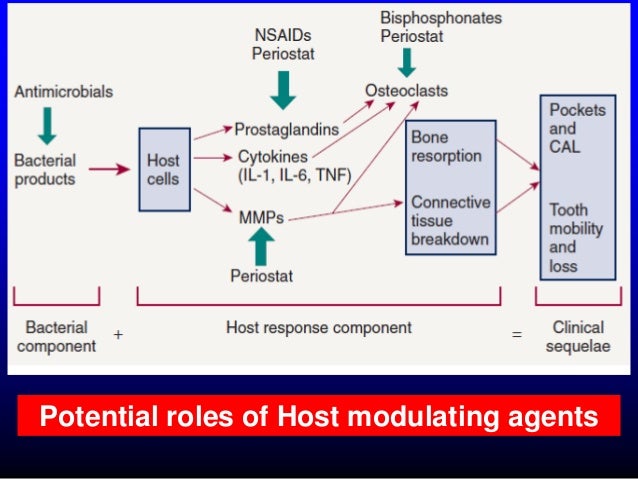
MMPI, matrixmetalloproteinaasi-inhibiittori Periostat


https://image.slidesharecdn.com/antiinfective-hostmodulationdralaa-140501041459-phpapp02/95/antiinfective-host-modulation-dr-alaa-34-638.jpg?cb=1398918053

MMPs , sinkistä riippuvia endopeptidaaseja

Sinkistä riippuvaiset endopeptidaasit MMPs

Anal Bioanal Chem. 2017 Aug 12. doi: 10.1007/s00216-017-0537-x. [Epub ahead of print]

Multimodal laser ablation/desorption imaging analysis of Zn and MMP-11 in breast tissues.

Abstract
Matrix metalloproteinases (MMPs) are a family of zinc-dependent endopeptidases. The main functions of these metalloproteinases are the degradation of the stromal connective tissue and basement membrane components.
Recent data from model systems suggest that MMPs are involved in breast cancer (BC) initiation, invasion, and metastasis.
Particularly, MMP-11 (stromelysin-3) is expressed in stromal fibroblasts adjacent to epithelial tumor cells, and high levels of this metalloproteinase were associated with tumor progression and poor prognosis of BC. Consequently, MMP-11 involved in these processes can be a candidate as a new potential prognostic biomarker in BC.
 Bioimaging techniques based on laser ablation/desorption and mass spectrometry are rapidly growing in biology and medicine for studies of biological systems to provide information of biomolecules (such as proteins, metabolites, and lipids) and metals with lateral resolution at the micrometer scale.
In this study, matrix-assisted laser desorption/ionization mass spectrometry imaging (MALDI-MSI) has been used for the first time to investigate the distribution of MMP-11 in human breast cancer tissues in order to show a possible correlation between cancerous and healthy samples, by differential proteomics and using such differences for possible cancer diagnosis and/or prognosis.
Additionally, those human breast tissue samples were analyzed in parallel by laser ablation inductively coupled plasma mass spectrometry (LA-ICP-MS) in order to gather additional information about the elemental distribution of Zn and its possible associations with MMPs.

KEYWORDS:

Biological samples; Laser ablation; Mass spectrometry/ICP-MS
PMID:
28801789
DOI:
10.1007/s00216-017-0537-x

Reseveratroli välillinen MMP-13 suppressori+

https://fi.wikipedia.org/wiki/Resveratroli

Resveratroli eli trans-3,5,4’-trihydroksistilbeeni on useissa kasveissa esiintyvä fenoliyhdiste, jota markkinoidaan myös ravintolisänä. Sillä uskotaan olevan lukuisia terveysvaikutuksia, kuten syöpää, virustauteja, vanhenemista ja tulehdusta ehkäiseviä sekä hermosoluja suojaavia vaikutuksia. Resveratrolia on löydetty erityisesti punaisista ja sinisistä viinirypäleistä, sekä viininlehdestä ja karpaloista. Ranskalaisten huomattavan alhaisen sydän- ja verisuonitautiesiintyvyyden on selitetty johtuvan heidän runsaasta punaviinin kulutuksestaan, sillä he saavat siitä resveratrolia. Erään tutkimuksen mukaan resveratroli suojaa diabetekselta ja liikapainolta aktivoimalla aineenvaihdunnan säätelyyn vaikuttavaa Sirt1-geeniä.[1] Resveratroli on myös fytoaleksiini, joka suojaa kasveja useiden eri sienipatogeenien hyökkäyksiltä.lähde? Toisaalta on arveltu, että resveratrolitutkimuksia on manipuloitu systemaattisesti, mistä alkoholiteollisuus on hyötynyt.[2]
Resveratrolin kemiallinen kaava on C14H12O3, moolimassa 228,25 g/mol ja CAS-numero 501-36-0 (trans-resveratroli), 61434-67-1 (cis-resveratroli).

MMP-13 , nivelrustolle tärkeä matrixmetalloproteinaasi

https://www.ncbi.nlm.nih.gov/gene/4322

MMP13 matrix metallopeptidase 13 [ Homo sapiens (human) ]

Gene ID: 4322, updated on 31-Dec-2017
Official Symbol
MMP13provided by HGNC
Official Full Name
matrix metallopeptidase 13provided by HGNC
Primary source
HGNC:HGNC:7159
See related
Ensembl:ENSG00000137745 MIM:600108; Vega:OTTHUMG00000165850
Gene type
protein coding
RefSeq status
REVIEWED
Organism
Homo sapiens
Also known as
CLG3; MDST; MANDP1; MMP-13
Summary
This gene encodes a member of the peptidase M10 family of matrix metalloproteinases (MMPs). Proteins in this family are involved in the breakdown of extracellular matrix in normal physiological processes, such as embryonic development, reproduction, and tissue remodeling, as well as in disease processes, such as arthritis and metastasis. The encoded preproprotein is proteolytically processed to generate the mature protease. This protease cleaves type II collagen more efficiently than types I and III. It may be involved in articular cartilage turnover and cartilage pathophysiology associated with osteoarthritis. Mutations in this gene are associated with metaphyseal anadysplasia. This gene is part of a cluster of MMP genes on chromosome 11. [provided by RefSeq, Jan 2016]
Expression
Low expression observed in reference dataset See more
Orthologs
  • Mitä kirjallisuutta tästä MMP-13.asta on kertynyt?

Related articles in PubMed

GeneRIFs: Gene References Into FunctionsWhat's a GeneRIF?